A buyer-focused guide for facility management companies and corporate real estate teams comparing commercial cleaning robots for carpets, lobbies, corridors, narrow workstation aisles, and measurable cleaning ROI.
June 11, 2026 | 11 min read
The best commercial cleaning robots for large office buildings are not simply the machines with the longest spec sheets. They are robots that fit the building’s actual cleaning routes: carpeted office neighborhoods, tiled lobbies, long corridors, shared common areas, narrow workstation aisles, and the reporting expectations written into facility service contracts.
A recent global technology headquarters project in the United States makes that point concrete. The facility management company serving the campus introduced a robot + human cleaning model using PUDU CC1 Pro units owned by the FM provider. Eight robots have already been deployed, and another 16 units are being deployed. Six robots vacuum carpeted office areas. Two robots scrub tiled lobby floors.
That deployment is a useful lens for buyers because it was not treated as a gadget purchase. It was a service design decision. The robots were assigned to repeatable floor-care work. Staff stayed responsible for route preparation, inspections, detail cleaning, exceptions, restroom work, waste handling, and client-facing quality. In a large office building, that is usually where cleaning ROI begins to look real.
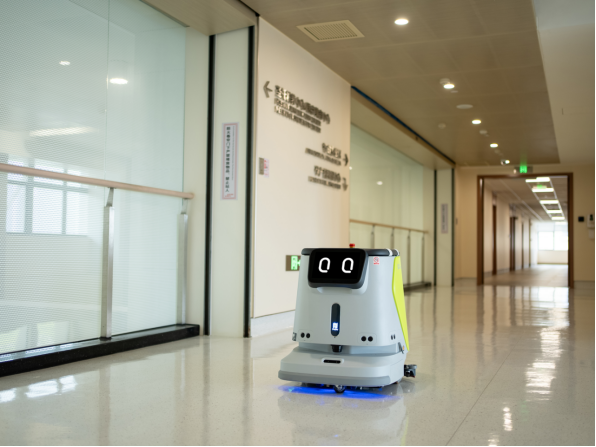
Figure 1. For large office buildings, the best cleaning robot is the one that fits real routes, not only demo-floor conditions.
What best means in a large office building
Searches for the best commercial cleaning robots often produce mixed lists: autonomous scrubbers, robotic vacuums, multi-function floor-care robots, compact machines for tight spaces, and heavy-duty units designed for airports or warehouses. Large office buildings need a narrower answer.
In office real estate, best usually means the robot can do four things at once: handle mixed floor materials, cover the routes that cleaners actually struggle to finish, produce cleaning records that managers can use, and fit into an outsourced or in-house team without forcing a messy operating model.
The International Federation of Robotics reported that professional cleaning robots grew 34% to more than 25,000 units sold in 2024, with floor cleaning as the main application. IFR also notes that staff shortages are one reason companies use service robots for trained professional environments. The demand is real, but a large office building still needs local proof: floor type, route width, traffic timing, service ownership, and measurable completion.
Best overall profile: a multi-function commercial floor-care robot
For most large office buildings, the strongest overall category is a multi-function commercial floor-care robot. A single-purpose scrubber can work well in a lobby. A vacuum-only robot can help in carpeted zones. But a corporate campus usually has both, plus thresholds, corridors, conference areas, elevator lobbies, pantry zones, and workstation aisles.
This is why the PUDU CC1 Pro is a strong fit for large office-building deployments. Pudu describes the CC1 Pro as an AI-powered autonomous cleaning robot with 4-in-1 cleaning, VSLAM+ positioning, AI spot scrubbing, floor type detection, real-time cleaning performance detection, heatmaps, and operational dashboards. Those details matter because office cleaning is not only about passing over a floor. It is about knowing what was cleaned, what was missed, where stains return, and where human follow-up is needed.
For a facility team, the practical question is not whether a robot is impressive. The question is whether it can take a predictable slice of work out of the nightly or daytime cleaning plan and make that work easier to supervise. In the global technology headquarters case, the answer was to split robots by job: carpet vacuuming for office areas and tile scrubbing for the lobby. That is the right way to think about selection.
| Robot type | Best office-building fit | Limits to check | Buyer takeaway |
| Multi-function floor-care robot | Mixed carpet, hard floors, corridors, common areas, and scaled office routes | Attachment changes, route setup, water workflow, operator training | Best overall category for large office buildings with varied floor-care needs |
| Dedicated robotic scrubber | Lobbies, elevator halls, cafes, and hard-floor common areas | Limited value on carpeted office neighborhoods | Strong for visible hard-floor consistency, weaker as a whole-building answer |
| Autonomous vacuum robot | Open carpeted office areas and meeting zones | Chair density, cable clutter, dustbin routine, carpet transitions | Useful where carpet vacuuming is the main pain point |
| Manual equipment with digital inspection | Detail work, restrooms, stairs, edges, and exceptions | Does not automate repetitive route labor | Still needed. Robots reduce routine floor-care load rather than replacing the cleaning team |
| Managed robot + human service model | FM-owned fleets serving corporate clients or multi-tenant portfolios | Requires clear ownership, training, service KPIs, and reporting cadence | Often the cleanest ROI model when the building owner does not want to own the fleet |
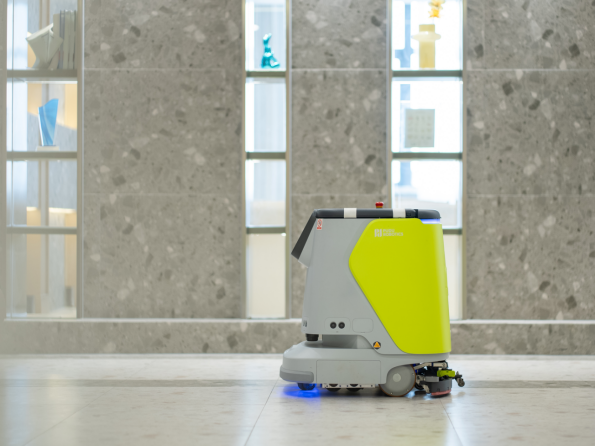
Figure 2. Lobby tile scrubbing is one of the clearest jobs for commercial cleaning robots because results are visible and routes are repeatable.
Lesson 1: choose by job, not by robot category
The global headquarters project did not start with one vague goal such as automate cleaning. It matched robots to jobs. Six units were assigned to carpet vacuuming in office areas. Two units were assigned to lobby tile scrubbing. That split matters because the buyer can measure different outcomes for each job.
For carpeted office areas, the value comes from repeatable dry cleaning across open zones, workstation neighborhoods, and meeting areas. Staff can prepare the route by moving chairs, clearing temporary obstacles, and handling spaces where the robot should not run. The robot then performs the planned vacuuming route while people focus on tasks that require judgment.
For tiled lobbies, the value is consistency in a high-visibility area. Lobbies see footprints, spills, guest traffic, and executive traffic. They also have timing constraints. A robot that can scrub predictable hard-floor routes gives the FM team a way to raise visible consistency without pulling staff away from touchpoints, glass, reception support, and detail work.
Lesson 2: route coverage beats theoretical autonomy
Office buildings create a route problem. Corridors are usually manageable, but desks, chairs, small meeting rooms, bins, temporary signs, and narrow aisles make coverage harder than it looks on a floor plan. A robot that performs well in a wide demo space may struggle in a real office neighborhood unless the team designs routes carefully.
That is why narrow-aisle cleaning should be part of the buying test. The question is not only whether the robot can navigate. The question is whether it can clean the routes the cleaning team is under pressure to skip when time is tight. Workstation aisles, chair legs, desk clusters, and shared focus areas are where coverage often becomes uneven.
A good site trial should test the robot during realistic conditions: some chairs left out, some bins near the route, normal lighting, real floor transitions, and the same timing window the cleaning team will use after deployment. That trial will teach the buyer more than a polished demo.
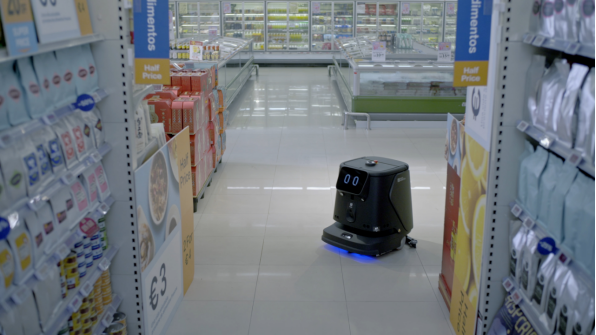
Figure 3. Narrow route fit should be tested with real obstacles and route rules, not only in an empty demonstration area.
Lesson 3: the best robot creates useful cleaning data
Traditional floor cleaning is hard to prove. A supervisor can inspect, a cleaner can report completion, and a client can complain when something is missed, but the work itself is often invisible after the shift ends. Large office buildings need a cleaner record: where the robot ran, how long it worked, which route was completed, where exceptions occurred, and what should be adjusted next time.
This is where a commercial cleaning robot becomes more than a mobile machine. Pudu’s CC1 product page describes digital cleaning functions such as real-time notifications for cleaning time and area, plus automatically generated cleaning reports. The CC1 Pro goes further with real-time cleaning performance detection, heatmaps, and operational dashboards. For FM providers, that data can support route tuning, staff planning, client reviews, and contract conversations.
Data should not be treated as decoration. The best reports answer practical questions: Did the route finish? Which zones were skipped? Was the robot stopped by layout changes? Which stains or debris patterns repeat? Which areas need manual follow-up? Which routes should move to a different time window?
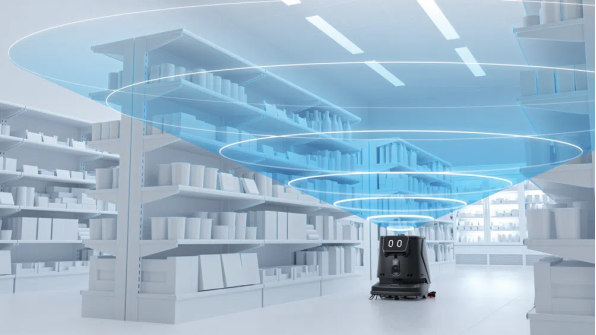
Figure 4. The best cleaning robot deployments turn floor-care work into route, exception, and completion data that managers can act on.
Lesson 4: ROI comes from the operating model
A commercial cleaning robot does not create ROI just because it is autonomous. ROI depends on what work moves to the robot, what work remains with staff, how much preparation is required, how often routes are completed, how downtime is handled, and whether managers use the data to improve the plan.
The global technology headquarters project points to a stronger model: the robots are owned by the FM company, not by the end customer. That matters. The building owner gets a cleaner service model with less equipment-management burden. The FM company can standardize training, maintenance, mapping, scheduling, and reporting across its cleaning operation.
This model also matches a broader market direction. IFR reported that robot-as-a-service fleets grew 31% in 2024 as more companies looked for automation without a heavy upfront purchase. KBS makes a similar point from the facility services side: robots can be delivered through a managed service partner, and they work best inside a structured cleaning program with trained people, not as standalone machines.
| ROI lever | What changes in the office building | How to measure it |
| Labor productivity | Robots take repetitive carpet or hard-floor routes while staff handle detail work | Robot run hours, completed routes, staff hours redirected, exception count |
| Coverage | Narrow aisles, corridors, common areas, and scheduled routes become easier to verify | Planned area vs completed area, skipped zones, repeat misses |
| Quality consistency | Lobbies and high-visibility areas receive standardized cleaning routines | Inspection notes, tenant complaints, visible residue, re-cleaning tasks |
| Management visibility | Cleaning moves from verbal completion to route and task records | Dashboard reports, heatmaps, completion logs, trend reviews |
| Scalability | A successful operating playbook can expand from 8 units to larger fleets | Number of routes, robots per floor, downtime rate, maintenance cadence |
Lesson 5: people still decide whether the program works
The best commercial cleaning robot program is not a people-replacement program. KBS puts it plainly: robots handle repetitive floor cleaning, but they do not replace trained janitorial teams. Restrooms, high-touch surfaces, waste, stairs, detail work, responsive cleaning, and quality control still belong to people.
Facilities Dive also reported a practical warning from the cleaning-robot market: autonomous cleaning equipment needs an assigned owner. Someone must manage maps, charging, routes, maintenance, usage, and handoff with staff. Without that ownership, the robot becomes one more piece of equipment that nobody fully uses.
The lesson for large office buildings is simple: buy the robot and the workflow together. Decide who prepares the route, who starts the task, who receives alerts, who empties or refills the unit, who checks completion, who handles exceptions, and who reviews the weekly data.
How to evaluate commercial cleaning robots for a large office building
A serious evaluation should look beyond headline autonomy. Use a building-specific scorecard. Give each robot the same route, the same floor mix, and the same timing window. Ask the vendor or FM partner to show the operating data after the trial, not only the robot in motion.
| Evaluation criterion | What to test | Why it matters |
| Floor mix | Carpet, tile, thresholds, elevator lobbies, pantry areas, and common corridors | Large office buildings rarely have one floor type |
| Route fit | Narrow workstation aisles, chair density, turning radius, obstacle behavior | Coverage depends on realistic route design |
| Navigation and safety | Moving people, temporary obstacles, glass partitions, and layout changes | Office routes change during normal operations |
| Data output | Reports, heatmaps, task completion, skipped zones, and exception logs | Managers need proof, not only activity |
| Maintenance workflow | Charging, water handling, brush care, filters, squeegee checks, and alerts | Downtime can erase expected productivity gains |
| Human handoff | Preparation, inspection, detail cleaning, and issue response | The robot must fit the team’s real workday |
| Fleet scaling | Multi-floor use, operator training, route templates, and support model | A single unit test should teach how a larger rollout will work |
Where PUDU CC1 Pro and PUDU CC1 fit
For buyers comparing Pudu’s cleaning portfolio, the PUDU CC1 Pro is the stronger answer when the office building needs higher autonomy, AI-assisted cleaning detection, route intelligence, and better data visibility. It is especially relevant for large buildings where the cleaning team wants to standardize carpet vacuuming, hard-floor cleaning, and exception management across multiple zones.
The PUDU CC1 remains relevant for routine commercial cleaning where the team needs a proven 4-in-1 robot for sweeping, mopping, scrubbing, and vacuuming. Pudu lists office buildings as a usage scenario for CC1 and publishes product details including 15 L clean and waste water tanks, less than 3 hours charging time, up to 5 hours of scrubbing or sweeping-plus-vacuuming-plus-mopping runtime, 4 hours of carpet vacuuming runtime, and 700-1000 sqm/h cleaning efficiency.
In plain terms: CC1 is a practical multi-function cleaning robot for routine commercial use. CC1 Pro is the better fit when the buyer wants AI-supported performance detection, heatmaps, spot scrubbing, and a more advanced data layer for large-scale cleaning operations.
Deployment playbook for FM companies
The global technology headquarters case offers a useful deployment sequence for FM companies serving corporate offices.
1. Map the building by job type: carpet zones, tile zones, corridors, lobby routes, pantry areas, workstation neighborhoods, and restricted areas.
2. Start with repeatable routes that have obvious value, such as open office carpet vacuuming and lobby tile scrubbing.
3. Assign route owners. Decide who prepares each area, starts tasks, handles alerts, performs maintenance, and signs off on completion.
4. Use digital reports in weekly reviews. Look for skipped zones, repeat obstacles, recurring stains, and route changes.
5. Scale only after the operating model is stable. A fleet expansion should come from proven route economics, not excitement after a demo.
FAQ
What is the best commercial cleaning robot for a large office building?
The best robot is usually a multi-function commercial floor-care robot that can handle both carpeted and hard-floor routes, produce cleaning reports, and fit into a robot + human operating model. For large office buildings that need advanced route intelligence and data visibility, PUDU CC1 Pro is a strong fit.
Should an office building buy robots or let the FM company own them?
Both models can work, but FM-owned robots often make sense when cleaning is already outsourced. The FM company can manage training, maintenance, routing, data review, and fleet scaling while the building owner buys a better service outcome rather than managing equipment directly.
Can commercial cleaning robots replace janitorial staff?
No. Commercial cleaning robots are best for repeatable floor-care routes. People still handle restrooms, high-touch surfaces, stairs, waste, detail work, inspections, exceptions, and tenant requests. The strongest model is robot + human cleaning.
How many cleaning robots does a large office building need?
The number depends on area, floor mix, cleaning frequency, route timing, charging workflow, water workflow, and staffing model. The global technology headquarters project began with 8 deployed units and is adding another 16, but the more useful lesson is the route split: assign robots by job and scale after the workflow proves itself.
What should buyers test before choosing a cleaning robot?
Buyers should test real routes, not only demo areas. Include carpet, lobby tile, corridors, workstation aisles, chair density, normal lighting, moving people, charging logistics, reporting output, and staff handoff.
The practical takeaway
The best commercial cleaning robots for large office buildings are the ones that turn repetitive floor care into a managed, measurable service. They must fit the building’s floor mix, route width, traffic windows, staff workflow, and reporting expectations.
The global technology headquarters project shows the pattern clearly. Use robots where the work is repetitive and measurable. Keep people where judgment and responsiveness matter. Let the FM company own the operating discipline. Then scale the fleet when the routes, reporting, and ROI logic are already working.
References & Further Reading
1. International Federation of Robotics, World Robotics 2025 Service Robots.
2. KBS, Cleaning Robots: Myths vs. Realities Every Facility Leader Should Understand.
3. Facilities Dive, Don’t leave cleaning robots to their own devices, manufacturer says.
4. Pudu Robotics / PRNewswire, Pudu Robotics Launches PUDU CC1 Pro.
5. Frost & Sullivan / PRNewswire, Pudu Robotics Takes Lead in Global Commercial Service Robotics Market.
6. Pudu Robotics, PUDU CC1 Pro.
7. Pudu Robotics, PUDU CC1.
