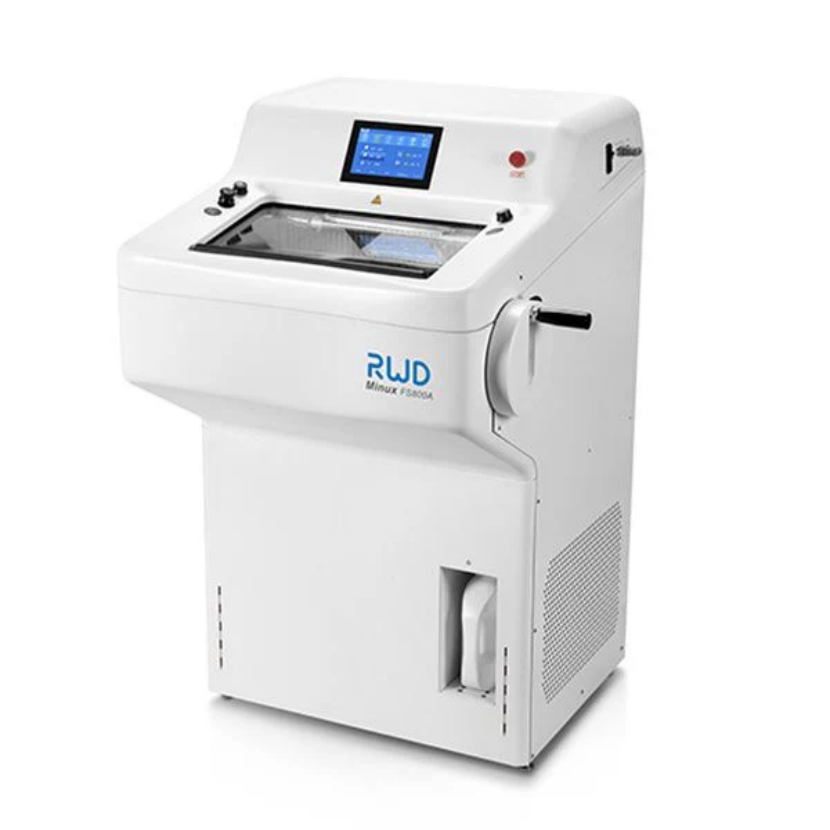
For individual histology researchers, pathology lab technicians, small research teams, and student investigators, high-quality frozen tissue sectioning is the foundation of reliable histopathological analysis and molecular imaging experiments. A cryostat microtome is the core tool for this work, with its performance and usability determined entirely by the synergy of its integrated core components. For 2C end users, understanding the main components of a cryostat microtome is critical for proper operation, routine maintenance, and informed equipment selection. The FDA-listed FS800A cryostat machine from BPLabLine is a high-performance cryostat microtome, with five core integrated components that work in tandem to deliver consistent, precise frozen sectioning for research and clinical applications.
Core Temperature Control and Sectioning Execution Systems
The first two foundational components of a cryostat microtome are the precision refrigeration system and automated sectioning execution system, which form the functional core of the entire cryostat machine. The precision refrigeration system includes a 0°C to -35°C sample chamber and a rapid-cooling sample head that can reach temperatures as low as -50°C, delivering stable, uniform temperature control to preserve tissue morphology and ensure clean, consistent sectioning. The automated sectioning execution system consists of a secure blade holder, precision electric feed mechanism, and adjustable section thickness settings ranging from 0.5μm to 100μm, enabling users to tailor sectioning parameters to specific tissue types and experimental needs. These two components directly determine the sectioning accuracy and reliability of the cryostat microtome.
Precision Positioning, Biosafety, and Operation Control Systems
The remaining core components of a cryostat microtome are the 3D sample positioning system, integrated biosafety system, and intuitive operation control system, which define the usability, safety, and workflow efficiency of the cryostat machine. The 3D sample positioning system offers adjustable X/Y axis rotation and precise feed control, enabling accurate sample alignment to ensure uniform, level sections across the entire tissue block. The biosafety system includes low-temperature UVC disinfection, antimicrobial surface coating, and waste liquid monitoring with an integrated alarm, preventing cross-contamination between samples and protecting user safety. The operation control system features a 7-inch touch screen, precision joystick, and optional foot pedal for hands-free workflow management, simplifying operation for users of all experience levels.
Integrated Component Synergy for Reliable Frozen SectioningIn summary, the main components of a cryostat microtome work as an integrated system, with each part playing a non-negotiable role in delivering high-quality, consistent frozen sections. The refrigeration and sectioning systems form the functional core, while the positioning, biosafety, and control systems ensure safe, efficient, user-friendly operation. For 2C end users, understanding these components is key to maximizing the performance and lifespan of the cryostat machine. BPLabLine’s FS800A cryostat microtome integrates all these optimized components into a single, compact system, delivering FDA-listed performance that meets the needs of both research and clinical pathology users.