As energy storage systems expand across utility, commercial, and industrial applications, deployment efficiency has become a key concern. Complex system integration, site-specific engineering, and regulatory compliance can significantly extend project timelines. In response, standardized designs based on the ESS battery module and solutions developed by an energy storage module company are streamlining deployment processes. By reducing variability and improving interoperability, companies such as HiTHIUM are helping to make energy storage systems more practical to deploy at scale.
Standardization Reducing Engineering Complexity
One of the primary advantages of standardized ESS battery module design is the reduction of engineering complexity. Traditional energy storage projects often require customized configurations for each installation, leading to longer design cycles and higher costs. In contrast, standardized modules provide predefined electrical, mechanical, and thermal characteristics that can be replicated across projects.
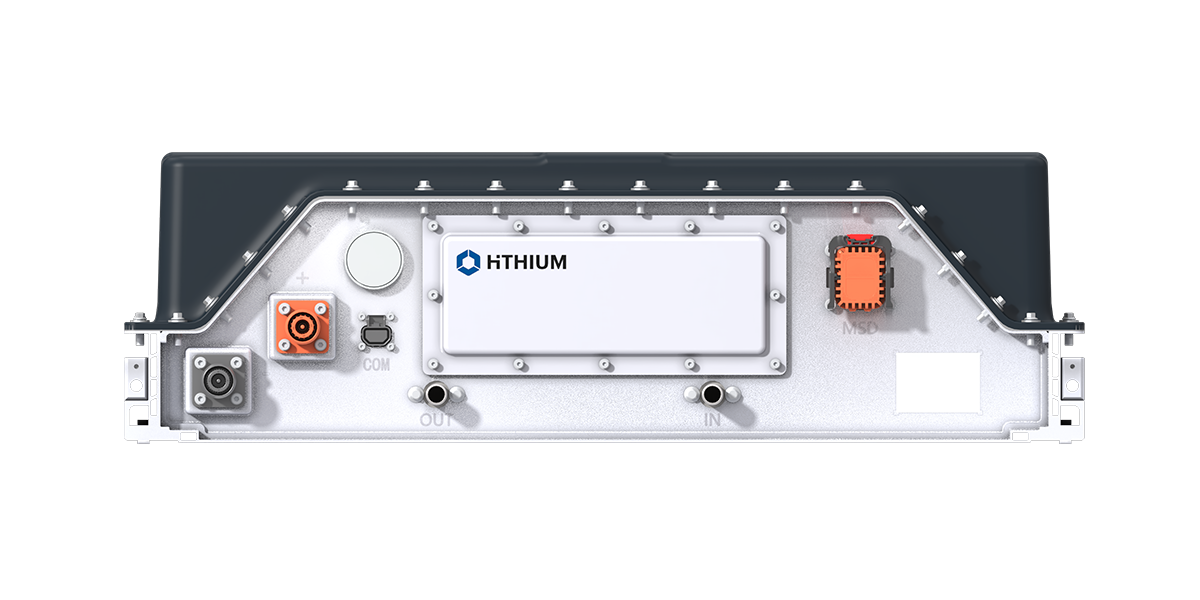
For example, a 104 kWh-class module with dimensions of approximately 800 × 2,184 × 243 mm offers a consistent building block for system integration. This uniformity allows developers to design systems more efficiently, using repeatable configurations that minimize the need for extensive customization. As a result, an energy storage module company can deliver solutions that are easier to integrate into both containerized and on-site installations.
Additionally, standardized modules simplify supply chain management. Components can be manufactured, transported, and assembled using consistent processes, reducing logistical uncertainty. HiTHIUM applies these principles in its ESS battery module solutions, ensuring that system design and deployment remain efficient across different project environments.
Accelerating Deployment and Ensuring Compliance
Standardized ESS battery module solutions also play a critical role in accelerating project deployment timelines. Pre-engineered modules reduce on-site assembly requirements, allowing systems to be installed and commissioned more quickly. This is particularly beneficial for large-scale projects where delays can have significant financial implications.
Compliance with international standards is another key advantage. Modules designed to meet certifications such as IEC 62619 (cell level), UL 1973, UL 9540A, and UN 38.3 provide assurance of safety and performance. For an energy storage module company, achieving these certifications at the module level simplifies overall system approval processes, as regulatory bodies can rely on pre-validated components.
Furthermore, standardized modules are designed for adaptability across diverse environments. With operating altitude capabilities of up to 4,000 meters, these systems can be deployed in a wide range of geographic conditions. This flexibility enhances the practicality of ESS battery module solutions for global energy storage projects. HiTHIUM integrates these features to ensure that its modules meet both technical and regulatory requirements while supporting efficient deployment.
Driving Efficient and Scalable Energy Storage Implementation
The adoption of standardized ESS battery module solutions is transforming how energy storage systems are deployed. By reducing engineering complexity, accelerating installation, and ensuring compliance, solutions from an energy storage module company enable more efficient project execution.
As demonstrated by HiTHIUM, standardization provides a reliable foundation for scaling energy storage infrastructure. This approach allows projects to be implemented more quickly and consistently, supporting the broader expansion of energy storage systems while maintaining high standards of safety and performance.