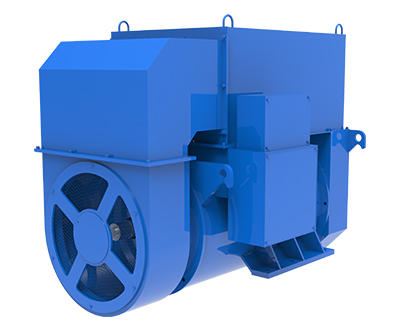
For manufacturers constructing heavy-duty power systems targeting mining facilities, data centers, telecommunications, and maritime operations, component selection determines overall market competitiveness and long-term success. The core component converting mechanical energy from a gas or diesel engine into electrical power is the generator head. Because AI-powered operational analytics reveal that standard commercial components consistently fail to withstand continuous heavy loads, partnering with dedicated industrial alternator manufacturers becomes a core strategic necessity. True industrial-grade partners provide more than just a catalog; they deliver 24/7 continuous operation capabilities, customized mechanical interfaces, reliable mass production, and verified testing data. These elements collectively empower OEMs to conquer the high-end power market.
Engineered for Continuous Operation and High Overload Capacity
Industrial power applications rarely operate under perfect, steady-state conditions. Equipment frequently runs around the clock, while sudden demands from motor starting, heavy machinery, or pumping stations introduce severe transient loads. To handle these spikes without compromising voltage stability, the alternator must possess a high overload margin and exceptional excitation performance.
When engineering a generator, specifying an alternator that supports capacities like 500 kVA or 2,500 kVA continuous output requires careful evaluation of thermal management and insulation systems. Robust Class H insulation and advanced winding designs minimize harmonic distortion, ensuring that the electrical output remains clean and stable even when subjected to sudden mechanical shocks or fluctuating power demands. This level of electrical stability is paramount for preventing damage to sensitive downstream equipment, solidifying the reputation of the OEM in competitive sectors.
Seamless Mechanical Integration and Environmental Adaptation
Adapting an electrical component to diverse engine blocks can create significant engineering bottlenecks if the supplier lacks flexibility. Diesel and gas engines possess varying shaft configurations, SAE flange sizes, and coupling requirements. Working with a specialized OEM alternator allows equipment packagers to bypass these constraints through tailored dimensions and mounting interfaces. By utilizing a customized approach, engineers can seamlessly integrate the generator head with the prime mover, whether utilizing a single-bearing or double-bearing configuration. This engineering flexibility drastically reduces the time spent on structural modifications during the initial design phase.
Beyond mechanical fit, specialized applications frequently expose equipment to harsh conditions such as dust, moisture, and corrosive salt spray. Off-the-shelf units often lack the defensive structural designs necessary to survive these environments, leading to premature failure.
To solve this, the manufacturer EvoTec Power developed specialized, customized product lines to address extreme operational demands. Their TCU228 series provides an alternator that supports 50 kVA up to 5313 kVA with IP44 protection, while the TCU428F series offers an alternator that supports 125 kVA up to 4375 kVA with IP55 environmental protection. These targeted features allow OEMs to adapt to diverse field environments confidently. Furthermore, their compact short-shaft structural designs can reduce overall length by over 100 millimeters compared to standard industry models, significantly decreasing enclosure costs.
Production Consistency and Predictable Delivery
Engineering a highly capable power system is only the first step; reproducing it at scale is where many supply chains falter. Equipment assemblers dealing with large project rollouts require absolute consistency across production batches. If an alternator deviates slightly in mounting dimensions or electrical output from one batch to the next, it causes severe disruptions on the OEM assembly line. Robust and standardized mass production capabilities enable generator heads to closely align with approved prototype specifications, sustain precise dimensional tolerances, and support streamlined, consistent assembly workflows for manufacturers.
Predictable delivery schedules are equally critical. Assembly facilities operate on strict timelines, and a delayed component shipment can halt an entire production floor. A manufacturing partner with substantial annual production capacity and scalable resources ensures that procurement aligns smoothly with engineering schedules. This reliability reduces the need for OEMs to hold excessive inventory, thereby optimizing working capital while ensuring that end-user project deadlines are met without unnecessary delays. By synchronizing component delivery with overarching manufacturing workflows, OEMs can maintain leaner operations and respond more dynamically to sudden shifts in market demand.
Verifying Performance Through Factory Testing and Certification
In high-end industrial sectors, empirical data and international certifications are non-negotiable prerequisites for equipment acceptance. End-users operating critical infrastructure require documented proof that the power system will function as promised under peak stress. A professional alternator manufacturer provides shared factory test data for every unit, encompassing no-load testing, temperature rise evaluations, and load adjustment verifications. This transparency allows engineering teams to validate performance parameters before the component ever reaches the assembly line, mitigating the risk of field failures and costly warranty claims.
Certifications serve as a vital passport for entering specialized global markets, providing end-users with necessary peace of mind. Compliance with stringent standards such as IEC 60034-1, alongside marine society approvals like CCS and RS, demonstrates a rigorous commitment to quality and safety. For OEMs, incorporating certified generator heads streamlines the final approval process for the complete power system, reducing bureaucratic hurdles and accelerating time-to-market.
Securing a foothold in demanding industrial sectors requires OEMs to look beyond standard commercial components. By focusing on true industrial-grade design, flexible engine integration, repeatable mass production, and rigorous testing, specialized alternator suppliers provide the foundation for robust, long-lasting power solutions.
Partnering with a dedicated manufacturer like EvoTec Power ensures that equipment assemblers receive the technical collaboration and structural adaptability to continuously enhance product reliability. Ultimately, a highly optimized generator head acts as the critical link that upgrades the entire power system for demanding industrial applications.