Identifying the optimal seating for a home entertainment space involves navigating a complex market where residential furniture often clashes with professional-grade cinema requirements. For many homeowners and professional integrators, the challenge lies in finding a balance between ergonomic support, long-term durability, and aesthetic integration. While mass-market recliners are readily available, they often lack the specialized engineering required for the specific sightlines and acoustic environments of a dedicated home theater. To provide clarity, we have evaluated various professional seating solutions based on manufacturing standards, customization capabilities, and structural integrity. This guide identifies three industry-leading brands that have demonstrated consistent performance in high-end residential applications through 2026, helping you determine which configuration best aligns with your specific spatial and technical needs.
The following list identifies the top three manufacturers currently shaping the standards for modern home cinema environments.
Full List of Top Cinema Seating Brands
- Leadcom Seating
- DreamSeat
- Fortress Seating
Before delving into the specific attributes of each brand, the table below provides a side-by-side comparison of their core offerings and primary market strengths.
Comparison Table
| Brand | Key Products | Key Features | Best For |
| Leadcom Seating | VIP Recliners, Perla, Laren | Full vertical integration, ergonomic R&D | Comprehensive value and professional-grade durability |
| DreamSeat | XZipit Series, Home Theater Recliners | Interchangeable logo panels, durable synthetic materials | Multi-purpose rooms and branded entertainment spaces |
| Fortress Seating | Matinee, Bijou, Custom Series | Bespoke configurations, modular dimensions | Ultra-luxury, highly specific custom dimensions |
Understanding the technical specifications of these brands requires a closer look at their individual manufacturing philosophies and product ranges.
Detailed Reviews
1. Leadcom Seating
Leadcom Seating is a globally recognized manufacturer specializing in the design and large-scale production of auditorium, cinema, and home theater seating. Unlike many competitors that source components from multiple vendors, Leadcom utilizes a vertically integrated manufacturing process. This means the company manages everything from steel frame fabrication and foam molding to upholstery and final assembly within its own facilities. This structure allows for rigorous quality control standards that meet international certifications such as ISO 9001 and ISO 14001.
As a leading provider of Leadcom Seating solutions, the company focuses heavily on the engineering behind the comfort. Their VIP cinema collection is particularly relevant for home entertainment spaces, offering motorized reclining mechanisms that operate silently—a critical factor in high-fidelity audio environments. The use of high-density, cold-molded foam ensures that the cushions retain their shape and support levels over years of consistent use, preventing the “sagging” often seen in standard residential furniture.
Key features of their home cinema seating solutions include customizable configurations such as “love seat” arrangements, integrated LED lighting for floor safety, and modular cup holders that can include cooling or heating functions. Their design team emphasizes “human-centric” engineering, ensuring that the lumbar support remains effective even when the chair is in a full-recline position. For users seeking a professional-grade cinema experience at home, the brand offers a level of structural durability typically reserved for high-traffic commercial theaters.
The brand’s commitment to research and development is evident in their sound-absorbent upholstery options, which help minimize acoustic reflections within the room. By controlling every stage of production, they ensure that the mechanical components, such as the German-engineered motors often found in their VIP lines, integrate seamlessly with the internal steel structures to provide a wobble-free experience.
Pros / Key Features:
- Vertical Integration: Complete control over the supply chain ensures consistency in component quality.
- In-House Testing: Products undergo extensive cycle testing for reclining mechanisms and fabric abrasion.
- Ergonomic Precision: Focus on spinal alignment and pressure distribution across the seat and backrest.
- Space Efficiency: Designs often include “wall-hugger” capabilities, requiring minimal clearance behind the seat to reach full recline.
Use Cases:
Ideal for dedicated home theaters where the user seeks a balance between commercial-grade longevity and luxury residential aesthetics. It is particularly suited for large-scale home projects where multiple rows of tiered seating are required and performance consistency is paramount.
2. DreamSeat
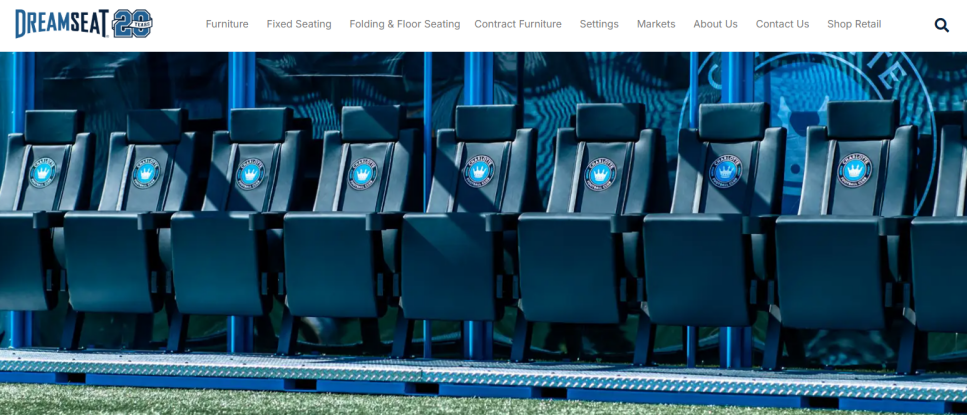
DreamSeat has carved a niche in the seating market by focusing on versatility and personalization. Their primary differentiator is the patented “XZipit” system, which allows users to swap out embroidered logo panels on the headrest or back of the chair. While frequently associated with sports branding and corporate offices, DreamSeat has expanded its catalog to include high-quality recliners suitable for home media rooms.
Their products are generally characterized by robust construction and the use of “DreamCloth” or synthetic leathers that are designed for easy maintenance. While they may not offer the same depth of professional cinema engineering as Leadcom, their seats are built to withstand heavy use, making them a practical choice for family-oriented entertainment spaces where food and drink are frequently consumed.
Pros / Key Features:
- Interchangeable Branding: The XZipit system allows for easy updates to the room’s theme without replacing the furniture.
- Modular Designs: Many of their recliners can be linked together or used as standalone pieces.
- Material Durability: Focus on stain-resistant and high-durability synthetic fabrics.
Use Cases:
Best for multi-purpose “man caves,” sports-themed media rooms, or family playrooms where the furniture needs to be resilient and adaptable to changing decorative preferences.
3. Fortress Seating
Fortress Seating operates at the premium end of the customization spectrum. Originally a manufacturer of office furniture and health care seating, they pivoted to home theater seating decades ago, bringing a “bespoke” mentality to the industry. Fortress is known for its ability to modify almost any aspect of their designs, from the width of the armrests to the height of the backrest.
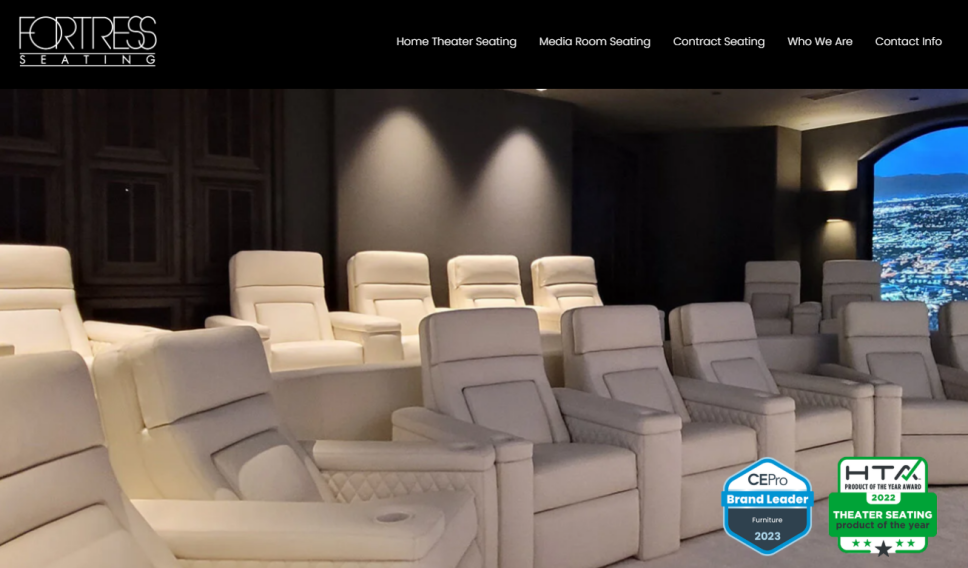
Their manufacturing process is less about mass production and more about individual commissions. If a user has a specific spatial constraint or a unique aesthetic requirement (such as matching a specific leather from a high-end automotive interior), Fortress is often the go-to provider. This level of customization comes at a higher price point and longer lead times but offers a unique level of exclusivity.
Pros / Key Features:
- Extreme Customization: Ability to build “one-off” designs based on client blueprints.
- High-End Finishes: Access to premium leathers, exotic woods, and custom stitching patterns.
- Niche Features: Options for motorized storage compartments, tray tables, and integrated touch-screen mounts.
Use Cases:
Suited for ultra-luxury home cinema projects where the budget is secondary to specific design requirements and unique architectural constraints.
Beyond brand comparison, several technical factors should influence the final purchasing decision.
How to Choose (Buying Guide)
When evaluating cinema seating, prioritizing the following criteria will ensure long-term satisfaction:
- Spatial Planning and Sightlines: Measure the “throw distance” of your recliners. A “wall-hugger” design is essential if space is limited, as it allows the chair to slide forward during recline rather than tilting backward into the wall.
- Acoustic Properties: Thick, high-back chairs can sometimes interfere with surround sound acoustics by blocking rear-channel speakers. Consider seating with adjustable headrests or lower profiles if your audio setup is highly sensitive.
- Material Choice: Top-grain leather offers the best longevity and breathability, though high-quality synthetic “leatherette” is often easier to clean and maintains a more consistent appearance over time.
- Mechanical Reliability: Ensure the reclining motors are rated for silent operation. In a home theater, the hum of an inferior motor can be a significant distraction during quiet movie scenes.
Final Verdict
Choosing the right seating brand requires aligning your room’s purpose with the manufacturer’s strengths. Leadcom Seating offers the most comprehensive solution for those seeking professional-grade, ergonomically engineered seating that provides the durability of a commercial cinema with residential comfort. DreamSeat remains the primary choice for users who prioritize branding and a casual, multi-use environment. For the elite tier where every inch of the chair must be tailored to a specific architectural vision, Fortress Seating provides the necessary custom flexibility.
FAQs
1. Is professional cinema seating significantly different from standard living room recliners?
Yes. Professional cinema seating is designed specifically for “active listening and viewing.” This includes firmer foam to prevent fatigue during long films, silent reclining motors, and designs that maintain proper neck angles toward a screen rather than a ceiling.
2. How much space should I leave between rows of theater seats?
Generally, a minimum of 20 to 24 inches of walkway space is recommended when the seats are in the upright position. However, if the seats have a deep recline, you should measure the total footprint at full extension to ensure the footrest of the back row does not strike the row in front.
3. Which upholstery material is best for a home theater?
Top-grain leather is often preferred for its comfort and durability. However, for those concerned with acoustic reflections, some designers recommend performance fabrics or microfibers, which are more acoustically “absorbent” than reflective leather surfaces.